Do You Need a Notary for a Power of Attorney in North Carolina?
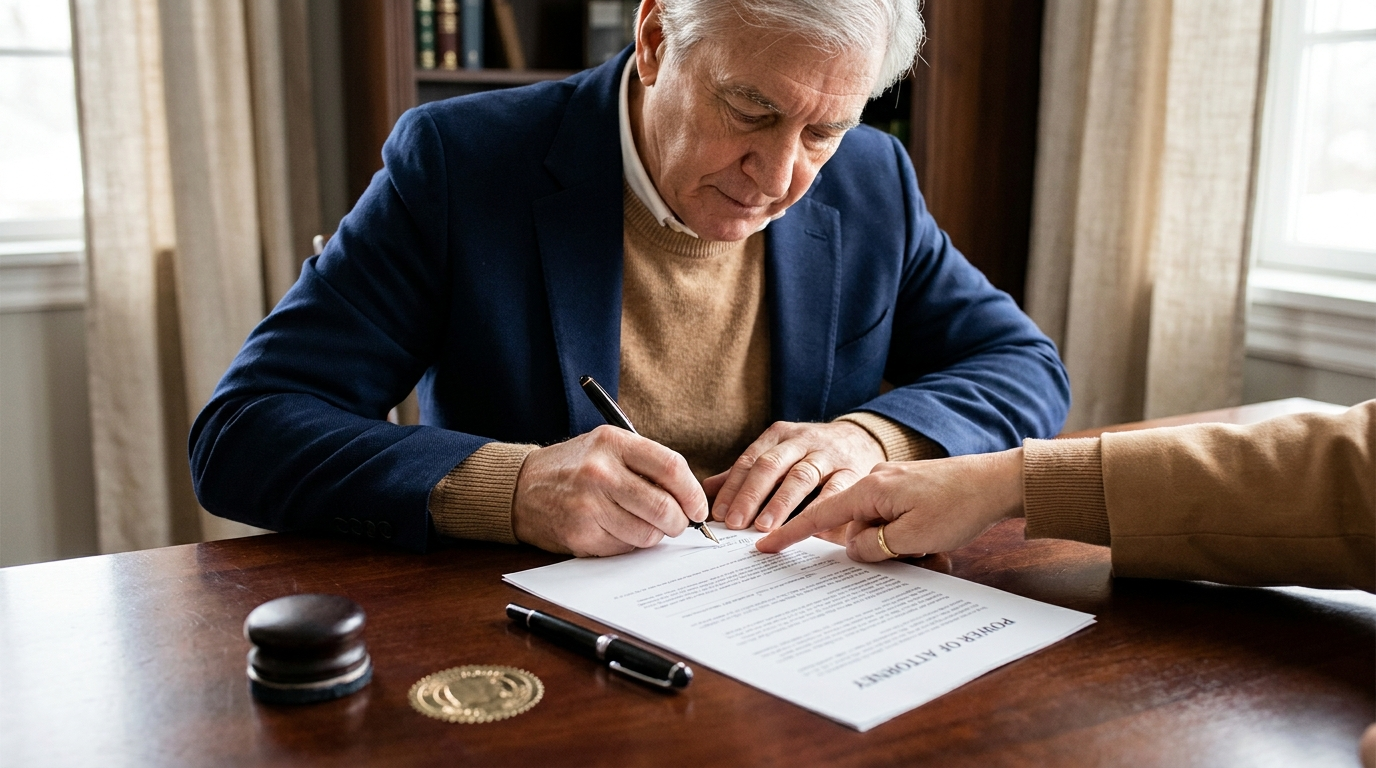
If you're preparing a power of attorney (POA) in North Carolina, one of the most common questions is simple: does it actually need to be notarized? The short answer is yes — and getting it wrong can make the entire document unenforceable when your family needs it most.
North Carolina requires a notarized power of attorney
Under the North Carolina Uniform Power of Attorney Act, a POA must be signed by the principal (the person granting authority) in the presence of a notary public and acknowledged before that notary. Without a proper notarial acknowledgment, banks, hospitals, and county register of deeds offices can — and often will — reject the document.
This applies to the two most common types people ask about:
- Durable (financial) power of attorney — lets someone manage your finances, property, and legal affairs.
- Health care power of attorney — names someone to make medical decisions if you cannot. In NC this one also requires two qualified witnesses in addition to the notary.
What you'll need at the signing
To keep your appointment quick and valid, have the following ready:
- The unsigned document — do not sign it ahead of time. The notary must witness your signature.
- A current, government-issued photo ID (driver's license, passport, or state ID).
- For a health care POA, two witnesses who are not your named agent, not related to you, and not your health care provider.
Signing when you can't get to an office
Many people need a POA precisely because someone is aging, ill, or recovering — which makes traveling to a bank or law office difficult. That's where a mobile notary makes the difference: the notary comes to your home, office, hospital room, or care facility at a time that works for you.
At Integrity Closings CLT, Frank Coxx regularly handles bedside and care-facility signings throughout the Charlotte and Monroe area — see our full service area — often the same day.
A quick note on legal advice
A notary verifies identity and witnesses signatures; a notary cannot draft your POA or tell you what powers to grant. If you need the document prepared, an estate planning attorney can help — and once it's ready, we'll handle the notarization wherever you are.
About the author
Frank Coxx is a commissioned North Carolina Notary Public and NNA-certified Notary Signing Agent with 9+ years in loan signings and 20+ years in real estate. He provides mobile notary services throughout Charlotte and the surrounding metro. Call or text 980-505-8050.