Living Will vs. Health Care Power of Attorney: North Carolina Requirements
A living will states your own wishes about life-prolonging measures if you're terminally ill or permanently unconscious. A health care power of attorney names a person to make medical decisions for you. They do different jobs, most people benefit from having both, and in North Carolina both must be signed before two qualified witnesses and a notary.
These two documents are easy to mix up because they both deal with medical decisions. The simplest way to keep them straight: a living will speaks for you about specific end-of-life choices; a health care power of attorney appoints someone else to speak for you across any medical situation.
What a living will does
A North Carolina living will — formally a "Declaration of a Desire for a Natural Death" — lets you state in advance whether you want life-prolonging treatment withheld if you have a terminal, incurable condition or are permanently unconscious. It's your voice on those specific decisions, so your family and doctors aren't left guessing. Under N.C.G.S. 90-321, it must be signed in the presence of two qualified witnesses and proved before a notary public.
What a health care power of attorney does
A health care power of attorney names a trusted person (your health care agent) to make medical decisions for you whenever you can't — not only at the end of life, but any time you're unable to communicate. It covers the broad, day-to-day medical choices a living will doesn't. Under G.S. 32A-16, it also requires two qualified witnesses and a notary.
Why most people have both
They work as a team. Your health care agent (from the POA) handles the wide range of decisions as they come up, while your living will gives clear direction on the specific end-of-life questions — which can relieve your agent of the hardest choices. North Carolina lets you execute both, and they're commonly signed at the same appointment alongside other estate documents.
Signing them correctly in North Carolina
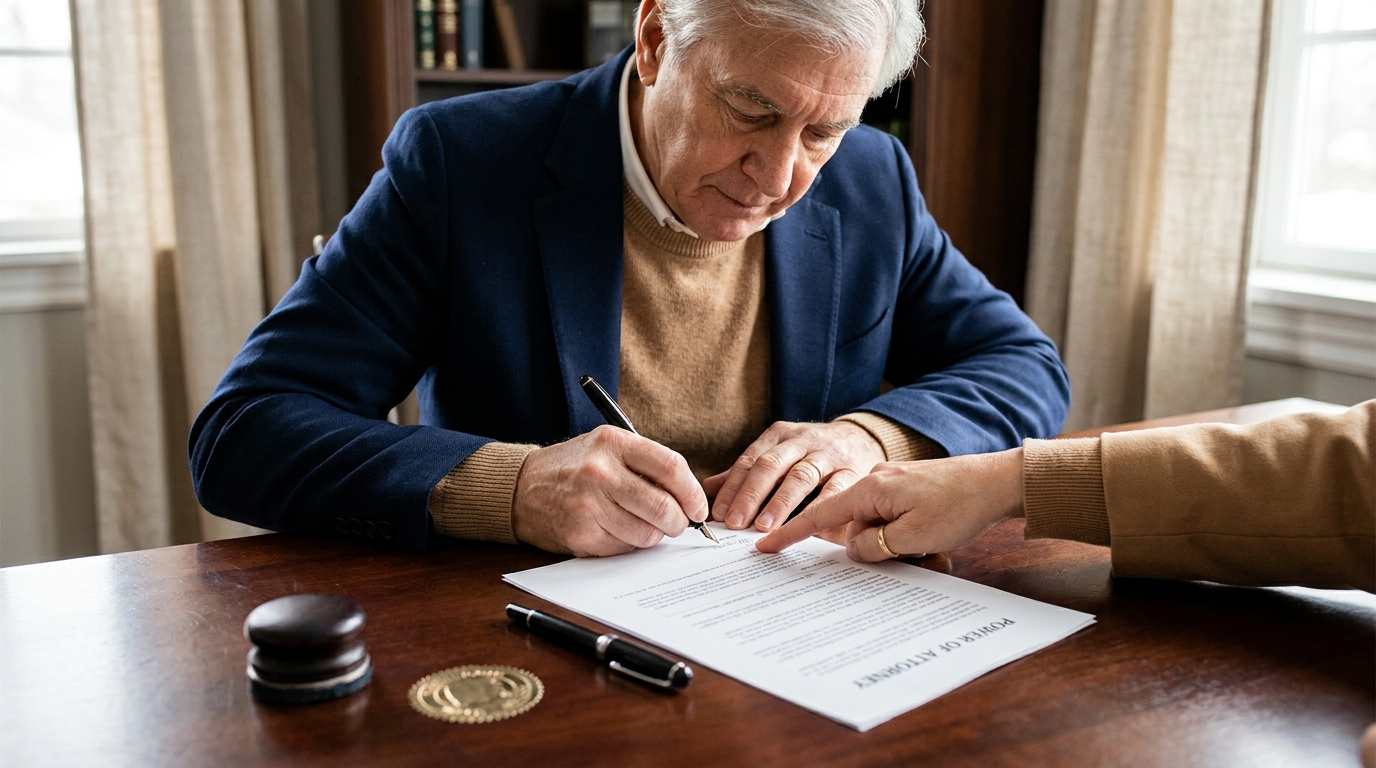
Because both documents require two qualified witnesses and a notary, the witness rules matter. Your witnesses generally can't be your spouse, a relative, anyone who would inherit from you, your named agent, or your attending physician or their employees. I do not provide witnesses, so please arrange two neutral adults to be present. I bring the notarization to you — at home or a hospital bedside — as long as you're alert and signing willingly.
About the author
Frank Coxx is a commissioned North Carolina Notary Public and NNA-certified Notary Signing Agent serving the greater Charlotte metro. Call or text 980-505-8050. Notarization only — not legal advice.
Ready to Sign Your Advance Directives?
I notarize living wills and health care powers of attorney across the Charlotte area — you bring the two witnesses, I come to you.