What Does a Home Seller Actually Sign at Closing in North Carolina?
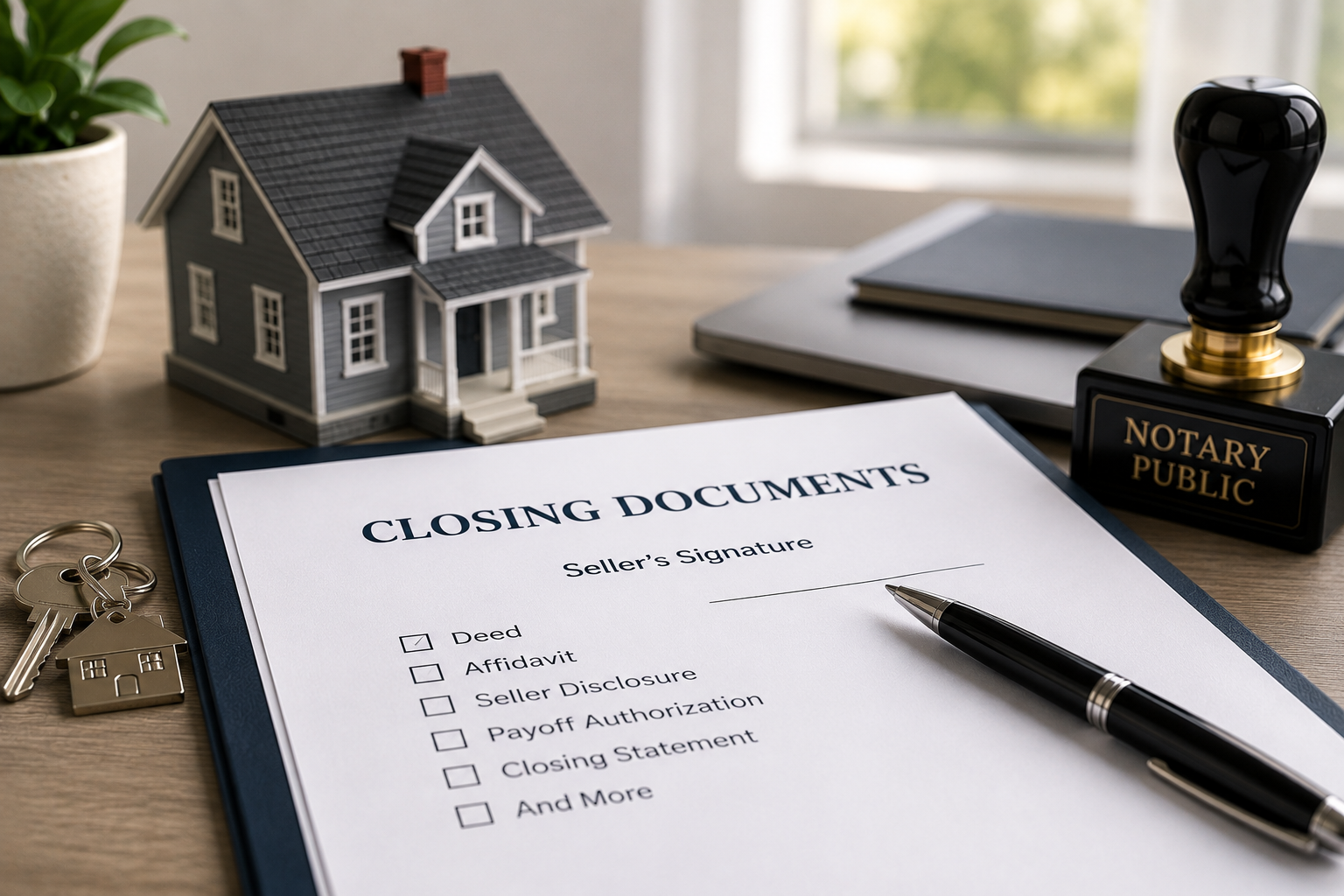
As a home seller in North Carolina you sign a smaller stack than the buyer, but the most important document — the deed transferring ownership — has to be notarized. Here is what is usually in your package and why the notary matters.
Buyers get the thick loan package; sellers get a leaner but higher-stakes set of documents. The signing is quick, but a mistake on the deed or a missing notarization can hold up recording and delay everyone's funds. Here is what you are actually signing.
What is the most important document a seller signs?
The deed — it is the document that legally transfers ownership to the buyer, and North Carolina requires it to be notarized before it can be recorded. Get this one wrong and the whole closing stalls at the Register of Deeds.
Because recording depends on flawless execution, the deed is exactly the kind of document worth signing with someone who does this every day. That is where a loan signing agent earns their fee.
What else is in the seller package?
- Settlement statement (CD or ALTA): the line-by-line accounting of your proceeds, payoffs, and closing costs
- Affidavit of title: your sworn statement that there are no undisclosed liens or claims against the property
- Name and signature affidavit: confirming you are the person named on the title
- 1099-S / tax forms and any lien payoff authorizations
Not every document gets notarized — the deed and the affidavit of title typically do, while disclosures and the settlement statement usually just need your signature.
Do both spouses have to sign?
Usually yes. North Carolina has marital property rights, so even a spouse who is not on the title often has to sign the deed to release any marital interest. Your closing attorney will confirm who needs to sign, but plan for both spouses to be present with valid ID.
If one spouse is out of town or homebound, that is solvable — a mobile notary can meet them separately, or a power of attorney can be arranged in advance.
When do I get my money?
Not at the signing table. Under North Carolina's Good Funds Settlement Act, the attorney cannot disburse proceeds until the deed is recorded — which is why clean, correctly notarized documents keep your payout on schedule.
Can you come to me for the signing?
Yes. If you would rather sign at your kitchen table than a title office, call or text me at 980-505-8050 or book online. I handle seller closing packages across the Charlotte metro, including remote and out-of-state sellers.
About the author
Frank Coxx is a commissioned North Carolina Notary Public and NNA-certified Notary Signing Agent with 9+ years in loan signings and 20+ years in real estate. He provides mobile notary services throughout Charlotte and the surrounding metro. Call or text 980-505-8050.