When a Hospital Patient Has No ID: How Notarization Still Works
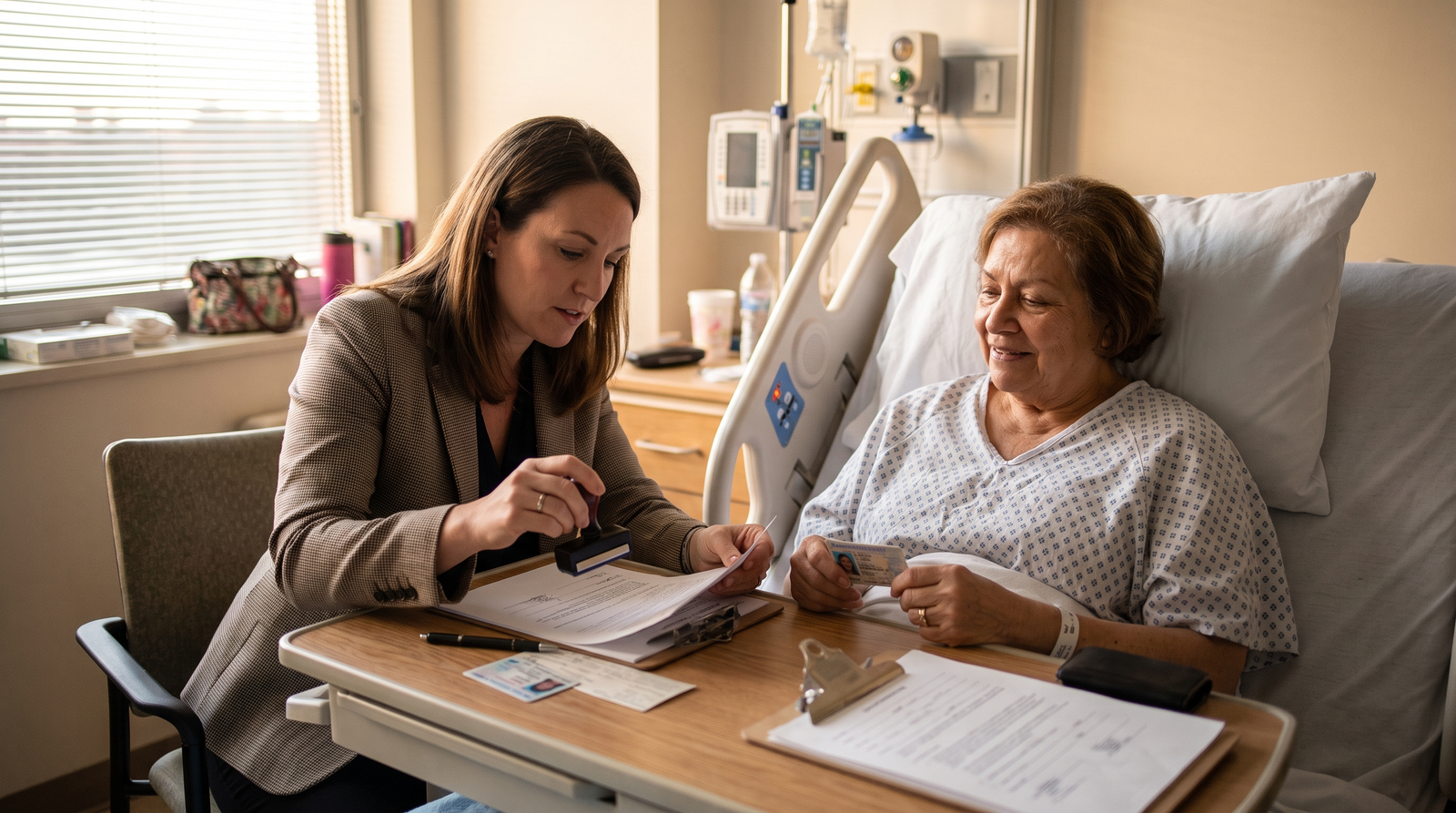
The Challenge: Hospital Patients Without ID
It happens more often than you'd think. A patient is admitted to a Charlotte-area hospital and needs to sign a power of attorney, healthcare directive, or other legal document—but their wallet and ID are at home or lost in the shuffle of emergency care.
This creates a real problem: notaries are required by law to verify the identity of signers. But what happens when a patient has no driver's license, passport, or state ID on hand?
The good news: it's still possible to notarize documents. The process just requires a different approach.
How Notaries Verify Identity Without an ID
North Carolina law allows notaries to verify identity in more than one way. When a patient has no physical ID available, here are the accepted methods:
- Credible Witness: A notary can rely on a credible witness—someone who knows the patient personally and can vouch for their identity. This might be a family member, close friend, or even hospital staff who has been caring for the patient.
- Notary's Own Knowledge: If the notary personally knows the signer and has known them for a sufficient period, they can verify identity based on that relationship.
- Hospital Records: Some hospitals can provide patient identification information that, combined with other factors, may satisfy notary requirements.
The key is that the notary must be certain of the patient's identity and must document the method used in the notary journal.
What You'll Need to Do
If your loved one is hospitalized and needs to notarize documents without an ID, here's what to expect:
- Arrange for a Credible Witness: Have someone who knows the patient present at the signing. This person must be able to confirm the patient's identity to the notary.
- Explain the Situation: When you book the notary appointment, let us know upfront that the patient won't have an ID. This helps us prepare and confirm the approach before we arrive.
- Gather Supporting Information: Have hospital paperwork, insurance cards, or other documents on hand that include the patient's name and details.
- Be Ready for Questions: The notary will ask questions to confirm identity—this is normal and protects everyone involved.
Important: The Notary's Role Remains the Same
Remember that a notary verifies identity and witnesses signatures—but does not provide legal advice. If there are concerns about whether the patient is mentally competent to sign, whether the document is appropriate, or what the document means, those are questions for an attorney, not the notary.
The notary's job is to confirm that the person signing is who they say they are and that they are signing willingly.
24/7 Bedside Notary Service in Charlotte
If you need a notary for a hospitalized patient in the Charlotte metro or Monroe area, Integrity Closings provides bedside notary service 24/7. We're experienced in working with patients who lack ID and understand the time-sensitive nature of hospital signings.
We serve Charlotte, Mint Hill, and the surrounding area. Contact Frank Coxx at 980-505-8050 to arrange an appointment. We can visit Monday–Saturday 9 AM–7 PM, late evenings 7–11 PM, or any time of day or night for hospital, hospice, and nursing home visits.
For more information on what to bring and how to prepare, see our guide on what to have ready for your bedside notary appointment.
When Time Matters
Hospital stays are unpredictable. If your parent, spouse, or loved one suddenly needs documents notarized and they don't have an ID, don't panic. Contact us today or call 980-505-8050. We'll work with you to find a solution and get to the hospital as quickly as possible.
About the author
Frank Coxx is a commissioned North Carolina Notary Public and NNA-certified Notary Signing Agent with 9+ years in loan signings and 20+ years in real estate. He provides mobile notary services throughout Charlotte and the surrounding metro. Call 980-372-4103.