Notarizing Documents for a Loved One in Hospice or Nursing Care in NC
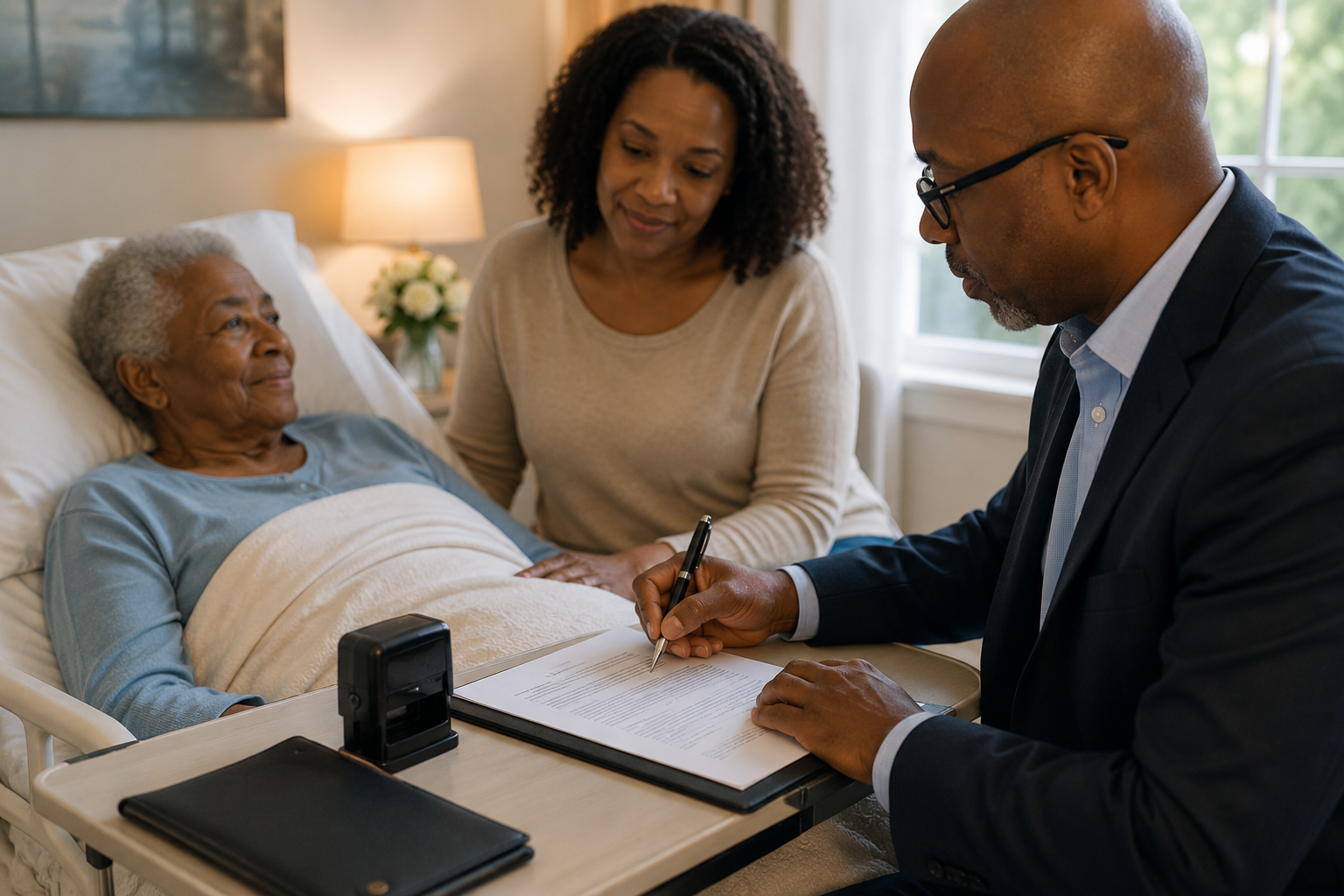
Why Hospice and Nursing Care Residents Need Documents Notarized
When a loved one enters hospice or nursing care, families often face urgent decisions about legal and financial matters. Powers of attorney, healthcare directives, beneficiary designations, and other critical documents may need to be notarized—sometimes within days or even hours.
A notary verifies the identity of the signer and witnesses their signature, ensuring the document is legally valid. Important note: A notary is not a lawyer and does not provide legal advice or draft documents. If you're unsure whether a document needs notarization, consult an attorney.
Common Documents That Need Notarization in Hospice and Nursing Care Settings
- Powers of Attorney (POA): Financial or healthcare POAs must be notarized in North Carolina.
- Healthcare Directives and Living Wills: Some require notarization to be legally binding.
- HIPAA Authorizations: Allow family members to access medical information.
- Beneficiary Designations: Changes to life insurance, bank accounts, or retirement accounts.
- Deed Changes or Property Documents: Updates to real estate or trust property.
- Advance Directives: End-of-life care preferences and medical wishes.
For a complete list of documents we notarize in hospital and nursing home settings, see our documents guide.
The Challenge of Getting to the Notary's Office
When a loved one is in hospice or nursing care, leaving their bedside to visit a notary's office isn't realistic—and it may not be medically possible. That's why mobile notary service is essential in these situations.
Frank Coxx brings notary services directly to your loved one's bedside, whether they're in a hospital, nursing home, or receiving hospice care at home. This eliminates stress and ensures documents are notarized quickly and safely.
What to Expect During a Bedside Notary Visit
Before the notary arrives, have the following ready:
- The unsigned documents that need notarization
- A valid photo ID for the person signing
- Any witnesses required by the document (some documents require one or more witnesses in addition to the notary)
- A clear, flat surface for signing (or a clipboard if needed)
Learn more about preparing for a bedside notary visit.
During the visit, the notary will:
- Verify the signer's identity using their valid ID
- Confirm the signer understands what they're signing and is signing of their own free will
- Witness the signature
- Apply the notary seal and complete the notary certificate
Capacity and Medical Considerations
A notary must verify that the signer is mentally capable of understanding the document and making the decision to sign. If a loved one is heavily sedated, unable to communicate, or lacks the mental capacity to understand the document, the notary cannot proceed.
If there are concerns about capacity, discuss this with the healthcare team and legal counsel beforehand. In some cases, documents may need to be signed earlier, while the person is still able to demonstrate understanding.
Service Areas in Charlotte Metro and Beyond
Integrity Closings CLT serves the Charlotte metropolitan area, including Mint Hill, and extends to Monroe and Union County. We're available for hospital and nursing home notary services throughout our service area.
Why Choose a Mobile Notary for Hospice and Nursing Care Documents
Families choose Integrity Closings CLT because we understand the sensitivity and urgency of notarizing documents during hospice and nursing care. Learn more about why families trust our mobile notary service.
- Flexible scheduling: We work around hospital and nursing home hours, including evenings and weekends when needed.
- Experience with medical settings: Frank Coxx is familiar with hospital and nursing home protocols and knows how to work respectfully in these environments.
- Compassionate service: We recognize that notarizing documents during hospice or end-of-life care is emotionally difficult.
- Local expertise: Based in Mint Hill and deeply familiar with North Carolina notary law.
How to Schedule a Bedside Notary Visit
If your loved one needs documents notarized while in hospice or nursing care, contact Frank Coxx at 980-505-8050. Provide the facility name, location, and the type of documents that need notarization. We'll coordinate a time that works with the facility's schedule and your loved one's medical needs.
For more information about our hospital and nursing home notary services, visit our service area page.
About the author
Frank Coxx is a commissioned North Carolina Notary Public and NNA-certified Notary Signing Agent with 9+ years in loan signings and 20+ years in real estate. He provides mobile notary services throughout Charlotte and the surrounding metro. Call or text 980-505-8050.