Who Can Be a Witness at a Nursing Home Signing?
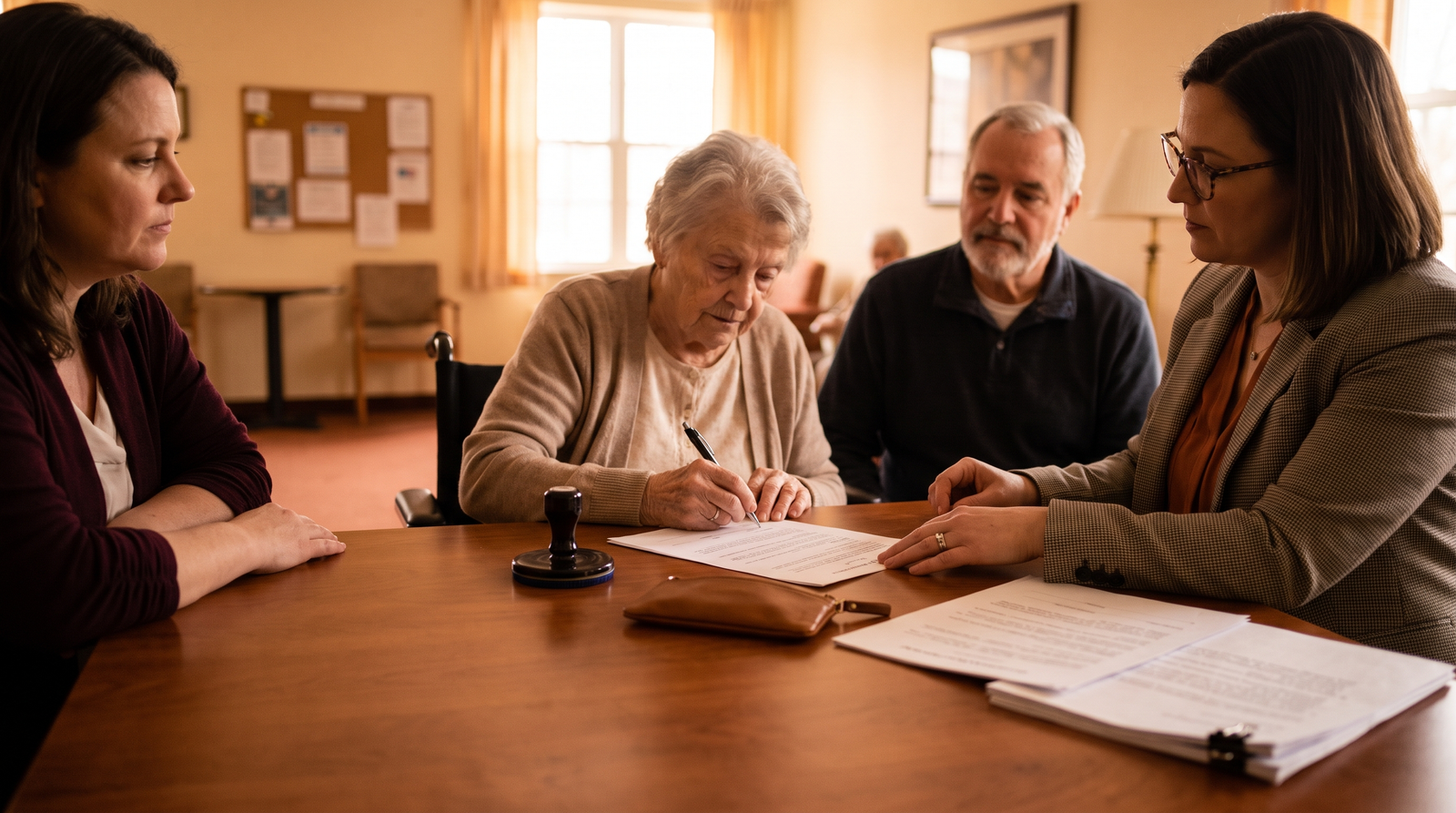
Witness Requirements for Nursing Home Documents
When a resident at a nursing home needs to sign estate documents, powers of attorney, or other legal paperwork, North Carolina law is clear: you need the right people present. But "the right people" doesn't mean just anyone—there are specific rules about who can and cannot serve as a witness.
Understanding these requirements can save you from costly delays, rejected documents, or even legal disputes down the road.
Who Can Be a Witness?
In North Carolina, a valid witness to a legal document must:
- Be at least 18 years old
- Be mentally competent and able to understand what they're witnessing
- Have no financial interest in the outcome of the document (in most cases)
- Not be a spouse of the person signing (for certain documents like wills and powers of attorney)
- Be present when the signer puts pen to paper
For nursing home signings, this typically means a family friend, healthcare staff member (like a nurse or social worker), or a professional like a notary—not the spouse or someone who stands to inherit or benefit.
Who Cannot Be a Witness?
North Carolina law prohibits certain people from witnessing:
- The spouse of the person signing (for wills and POAs)
- Beneficiaries or heirs who may inherit or receive money under the document
- Someone with a financial stake in the outcome
- Minors (anyone under 18)
- The notary public (if a notary is also present—they serve a different function)
A common mistake: asking a family member who's named in the will or power of attorney to witness the signing. That automatically disqualifies the document, even if everything else is perfect.
Notary vs. Witness: What's the Difference?
Many people confuse these two roles, especially in a nursing home setting.
- A witness verifies that the signer is who they say they are and that they signed willingly. Witnesses must be present and cannot have a financial interest in the document.
- A notary public verifies the signer's identity through official documentation, administers an oath if needed, and adds an official seal. A notary is a trained, licensed professional but is not a lawyer and does not give legal advice.
For many estate and POA documents, you need both a witness and a notary. This is where a professional nursing home notary becomes invaluable—they understand the rules and can guide the process without conflicts of interest.
Why This Matters in a Nursing Home
Nursing homes present unique challenges:
- The signer may have limited mobility or memory issues, and the witness needs to confirm competency
- Multiple family members may be present, but only certain ones can legally witness
- Staff members may be available to witness, but they must be truly neutral
- The signer may be on medication or hospice care, raising questions about capacity
That's why many families choose to hire a professional notary. A certified notary signing agent brings expertise, impartiality, and a paper trail that protects everyone involved.
How to Prepare for a Nursing Home Signing
Before scheduling the appointment:
- Identify neutral witnesses who meet the legal requirements (not spouses, not beneficiaries)
- Have the documents ready and reviewed by an attorney if needed (note: a notary cannot give legal advice or draft documents)
- Confirm the signer's capacity and comfort level with timing
- Arrange a mobile notary to come to the nursing home rather than moving a fragile resident
- Know what to bring to the appointment—ID, insurance cards, and any supporting documents
For more on preparing, see what to have ready for your bedside notary appointment.
Need Help in Charlotte?
If you're arranging a nursing home signing in the Charlotte metro or Union County area, Integrity Closings CLT can handle the entire process. Frank Coxx is a certified notary signing agent who specializes in bedside visits and understands exactly who can and cannot witness. We serve nursing homes, hospice facilities, and hospitals 24/7 when needed.
Call 980-505-8050 to schedule your appointment (Monday–Saturday 9 AM–7 PM, with after-hours and emergency availability). We'll make sure your documents are signed correctly the first time.
About the author
Frank Coxx is a commissioned North Carolina Notary Public and NNA-certified Notary Signing Agent with 9+ years in loan signings and 20+ years in real estate. He provides mobile notary services throughout Charlotte and the surrounding metro. Call or text 980-505-8050.